The Rodgers Forge Community Association states its position in a single paragraph on its own FAQ page. "We are not an HOA and dues are not mandatory. The RFCA also has no role in home sales in terms of providing documents for settlements." The same paragraph goes on: "Realtors and title attorneys should note, however, that covenants run with the deeds that require homeowners to get RFCA approval before making changes to the exteriors of their homes."
Taken together, those sentences define the sale. In a typical Maryland HOA community, a resale package arrives with the covenants attached. In Rodgers Forge, no package comes. The rules still apply, and responsibility for finding them moves to three other places: the title commitment, the seller's disclosure answers and the physical house.
Where the covenant actually lives
When the James Keelty Company developed Rodgers Forge, it put covenants and restrictions into every original property deed. According to the RFCA Architectural Covenants & Guidelines, each new owner accepts those covenants as a condition of the transfer. The key deed language reads: "No residential structure shall be erected, placed or altered on any building plot in this subdivision until the external design and location thereof has been approved in writing by the James Keelty Realty Corporation, its successors and assigns."
The phrase "successors and assigns" is why the rule still matters today. On January 18, 1960, the Keelty company assigned its enforcement rights to Rodgers Forge Community, Inc. by a deed and agreement recorded in Baltimore County Land Records at Liber 3666, Page 357. Each year the Board of Governors appoints an Architectural Committee to approve or disapprove exterior alterations.
The guidelines describe the standards in force as a combination of four things: Baltimore County Code, county zoning, the original covenants as they have been applied over time, and "the whole history of decisions by the Architectural Committee" from 1960 to the present. So the rulebook a buyer inherits is partly a record of past decisions, not just a recorded document.
Two documents that carry it to the closing table
The title commitment. The Maryland Insurance Administration's title insurance brochure explains that a title search comes before the transfer and reviews local records, including deeds, for liens, encumbrances, easements and similar matters. It also advises buyers to read the policy's exceptions, because those matters may not be covered. Recorded covenants that run with the land are a standard item in the Schedule B exceptions of a title commitment. In practice, the Keelty restriction is likely to show up on a page of the commitment that most buyers skim.
The seller's form. Maryland Real Property §10-702 requires the seller of a covered home to provide either a disclosure statement or a disclaimer statement. The current state Property Disclosure and Disclaimer form, marked "Rev August 3, 2026," includes several questions that bear directly on Rodgers Forge:
| Question | What it asks |
|---|---|
| 18a | Were required permits issued for improvements, and did they pass inspection? |
| 20 | Are there any violations of building restrictions or setback requirements? |
| 21 | Is the property in a Designated Historic District, and are there open violations? |
| 22 | Is the property subject to restrictions imposed by an HOA "or any other type of community association"? |
| 23 | Is the property subject to any restrictions imposed by a covenant? |
Question 22 says "any other type of community association," so a seller can't skip it just because the RFCA isn't an HOA. But these questions sit in the disclosure portion of the form. A seller who chooses the disclaimer instead sells "as is," except for known latent defects that pose a direct threat to health or safety. When a seller uses the disclaimer, questions 22 and 23 may never be answered, which leaves the recorded deeds and the title commitment as the written record of the covenant.
The third document is the house itself
Neither form tells a buyer whether a particular door, fence or window was ever approved. To answer that, compare the features you can see against the 2024 guidelines. These are the items most likely to stand out on a showing:
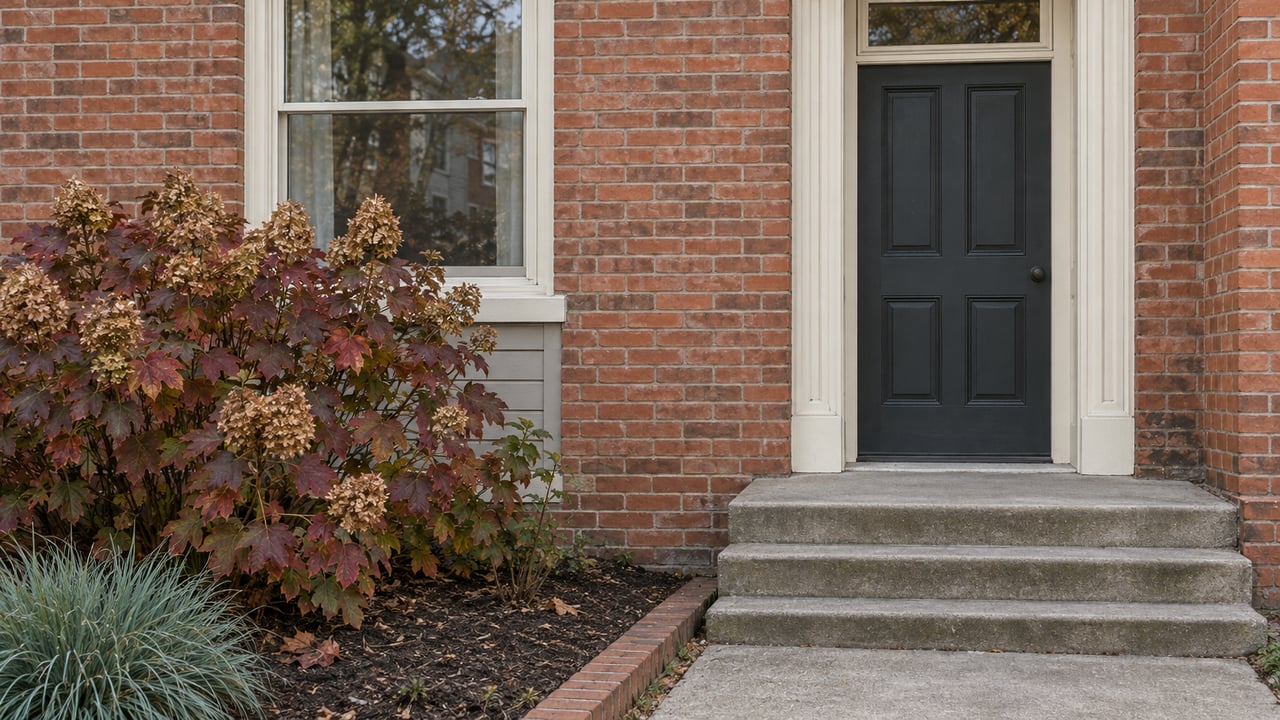
- Front doors. Full divided-lite doors must be wood and match the original 12- or 15-lite styles. Vinyl doors and security doors are not approved.
- Windows. Standard windows use six-over-six muntins and clear glass. Replacing standard windows with new bay windows is not approved, and new dormers are limited to the rear with advance approval.
- Trim and shutters. Window exteriors and trim must be white. Shutters must be white or black.
- Porches and additions. Additions are prohibited, including porch enclosures, sunrooms, garages and roof modifications. New screened porches are also prohibited, and replacement porches must match the original dimensions.
- Fences. Privacy-style fences and new chain-link fences are not allowed, and ordinary fences can't go in front yards.
- Solar. Panels must generally be rear-facing, roof-mounted and low-profile. Front-facing and ground installations are prohibited.
- Rear parking pads. A pad must fit within the owner's alley-side property line and leave the alley clearance the county requires. The number and orientation allowed depend on whether the home has a garage.
- Awnings. Canvas awnings must be solid dark green, and retractable awnings are allowed only at the rear.
A feature on this list doesn't prove the work went unapproved. The guidelines say approval patterns differ across the subsections built at different stages, and that features "approved in the past might not be acceptable today." Some homes carry older approvals that the committee would not grant now. Others carry changes that never went to the committee at all.
Why the difference matters after closing
The guidelines put the cost on the owner: "Any expenses associated with modifying or removing unapproved or nonconforming exterior modifications will be the sole responsibility of the homeowner." The same passage says the RFCA "does not waive, release, or disclaim its right to enforce or defend the Rodgers Forge property covenants." The covenants transfer with every sale. So the person holding the deed when a question comes up is the person the guidelines are addressing. How a dispute over inherited work would be resolved is a question for a real estate attorney, not something the guidelines answer.
For buyers, written approval is what separates an inherited feature from an inherited problem. Ask the seller for any RFCA approval letters or emails, along with Baltimore County permits, and ask early. Seller question 18a covers permits. The RFCA review is a separate step from the county permit process. For sellers, especially families preparing a parent's longtime home, gathering those letters before listing gives a buyer an answer before the question comes up.
How the approval process runs once you own the house
The RFCA posts its application and forms on its architecture page. There are dedicated forms for fences, decks, roofs and doors, plus a general application, and the association says to allow about four weeks. The sequence in the guidelines:
- Plan a change that fits the homes around yours, and check with your contractor whether a Baltimore County permit is required.
- Prepare the application with supporting materials, including the permit if one applies.
- Submit it to the Architectural Committee, which confirms receipt by email.
- The committee approves, approves with conditions, or denies the request.
- Start work only after the approval notice arrives and any conditions are met.
If the committee denies a request or adds conditions, the homeowner can appeal to the RFCA President or Vice-President by 9 p.m. on the Monday before the next regular Board meeting. The Board's majority vote is final. Simple requests move quickly. The FAQ says a roof replacement using an approved material still needs an application, but cases like that are often approved within a few days or even the same day.
The historic district label is a separate question
Rodgers Forge's National Register nomination lists 1,780 contributing buildings and no noncontributing ones. The Maryland Historical Trust describes National Register listing as honorary and says it "does not restrict private property owners or regulate maintenance, alterations, or sale." The exterior rules in Rodgers Forge come from the deeds, not the Register. Baltimore County runs its own historic review for properties on its Landmarks Lists or inside a county historic district. Those properties need a Certificate of Appropriateness for certain exterior work, so it's worth checking an individual address against the county's lists.
National Register status can also open a funding option. The MHT Homeowner Tax Credit accepts owner-occupied single-family homes that are contributing resources in a National Register district. Qualifying projects may receive a state income tax credit equal to 20 percent of eligible rehabilitation costs, capped at $50,000 in a 24-month period, with at least $5,000 in eligible expenses. MHT has to approve the work before it begins. If you're planning work that also needs RFCA approval, such as a roof, windows or a porch rebuilt to original dimensions, both reviews happen before work starts. Whether a given project qualifies is for MHT and a tax professional to decide.
FAQ
Does Maryland's Homeowners Association Act apply to Rodgers Forge? The Act defines a homeowners association by the authority to enforce a recorded "declaration," which it describes as an instrument that creates the authority to impose a mandatory fee. The RFCA says its dues are voluntary. Whether the recorded Keelty instruments fall under that definition depends on their exact wording, which is a legal question for a title attorney.
Do I need approval for a satellite dish? Not if the dish is 18 inches or smaller, mounted on the rear roof, and doesn't stick up above the roofline when viewed from the front.
Are the 2024 guidelines final? The current PDF is dated April 10, 2024, and the RFCA says the guidelines are subject to change. Confirm the current version with the association before relying on it for a contract or a project.
If you're preparing a Rodgers Forge rowhome for sale, or helping a parent part with one, The Hofmann Home Group can help you gather approval records, review the exterior against the current guidelines, and coordinate any repairs before the house goes on the market. Start with a home valuation, and we'll walk through the paperwork with you.
This article is general information, not legal, tax or financial advice. Consult a qualified professional about your situation.