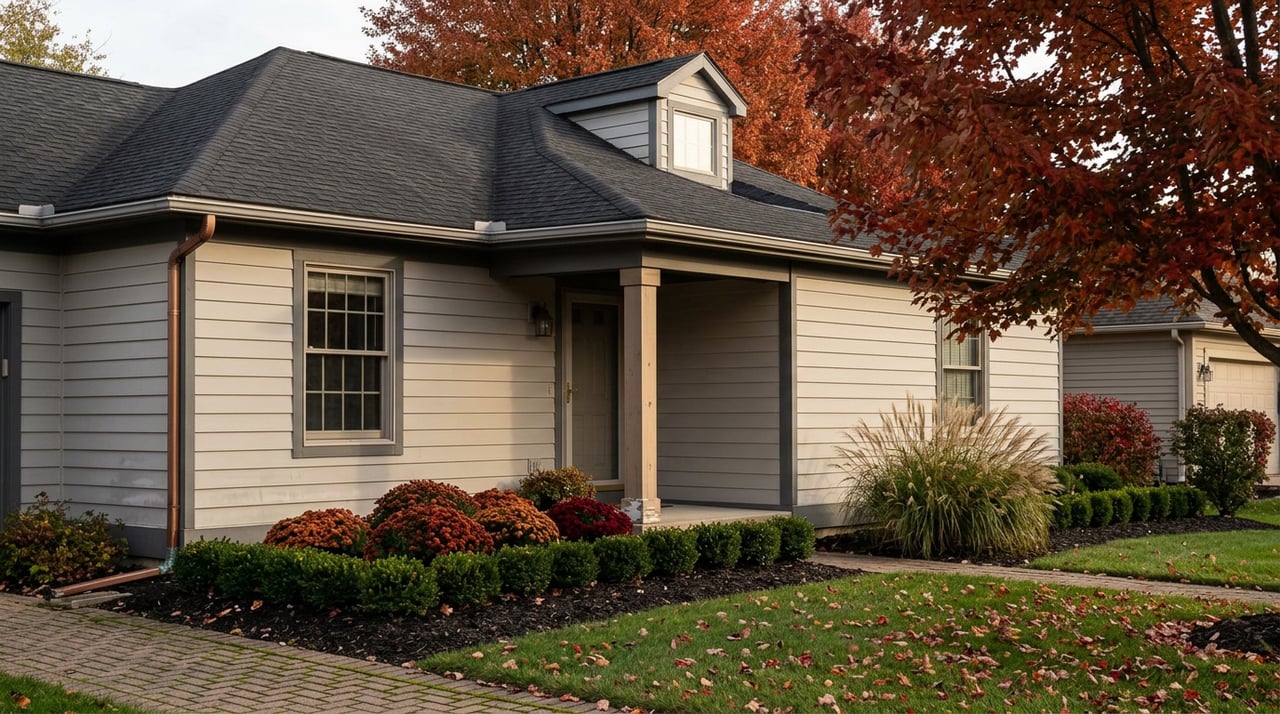
Picture a volunteer on her knees at the neighborhood sign on Providence Road, working mulch into the bed around the flower pillars while the mums go in for the season. A few blocks away, a Towson University resident assistant is walking a hallway of first-year students through move-in weekend, half of them still hauling boxes up the stairs. These two scenes look like they belong to different neighborhoods entirely. In Campus Hills, they show up in the same fall, often on the same page of the same newsletter.
That overlap is not a coincidence the neighborhood stumbled into. It is closer to a system. Campus Hills sits close enough to Towson University that its population turns over every August and September in a way most established neighborhoods never have to plan for, and the Campus Hills Community Association's fall calendar includes both neighborhood upkeep and conversations with incoming students.
A Volunteer Board, Not a Homeowners Association
The Campus Hills Community Association has been running since 1956, which puts it closer to seventy years old than sixty. It is worth being precise about what kind of organization that actually is, because the name invites confusion. CHCA is not a homeowners association with the power to levy fines or approve paint colors. It is an all-volunteer group, and its most recently published roster lists Karen Heil as president and communications lead, Annette Heimlich as vice president, Jennifer Gordon as treasurer, Elise Bruner as secretary, Bart Cook handling hospitality, Benny Louie on membership, and Wesley Wood as C.O.P. director. That same roster shows the Covenants Director seat sitting open, a small but honest detail about what running a neighborhood on volunteer hours actually looks like some years.
The association's own description of its purpose is to preserve and enhance the quality of life of its members, largely through family-friendly events rather than enforcement. That framing matters for anyone trying to understand what Campus Hills is like day to day. Nobody is going to knock on your door about your lawn. Somebody might, however, ask if you want to help plant mums.
What Actually Gets Done Before Halloween
The association's fall newsletter reads less like a mission statement and more like a punch list, which is refreshing on its own. Last fall's edition included:
- Mulch added to the community garden bed
- Mums planted to carry the garden into the fall season
- A plan to replace the seasonal flowers at the base of the entrance sign's pillars
None of this is dramatic. It is also exactly the kind of unglamorous upkeep that determines whether a neighborhood's shared spaces look cared for or forgotten, and it happens because a handful of residents show up and do it, not because a management company bills someone for it.
The Newsletter's Other Fall Project
The more interesting line in that same newsletter has nothing to do with landscaping. It describes association members that fall engaging in meaningful conversations about our cherished history and the significance of community with incoming freshman and transfer students from Towson University.
The annual arrival of new students can bring tighter parking, shifts in foot traffic, and a changed street rhythm for a few weeks until everyone settles in. The association's newsletter places its conversations with incoming students within that seasonal context.
That instinct connects to something else in the same newsletter: the Campus Hills Scholarship, a program available to young adults residing in the neighborhood, which the association recently reinstated after a period of dormancy. A previous recipient, Ryan Gordon, has shared his experience with the program to help introduce it to a new round of applicants. The application window opens on the association's website each year in the first week of January, and the group is actively seeking donations to keep the fund going. A scholarship and a welcome conversation with incoming students are not the same program, but both are described in the association's newsletter. Campus Hills is a neighborhood of roughly 1,500 residents, small enough that a newsletter can plausibly reach most of the households on its mailing list.
Cunningham's Cafe and the Park With Two Names
The neighborhood's daily geography backs this up in smaller ways. Ask a longtime resident where to grab breakfast and the answer that comes up again and again is Cunningham's Cafe at Olympic Place, near the Towson Roundabout. Neighbors describe it plainly: lots of covered outdoor seating, great menu, excellent coffee, and a free parking lot, which in this part of Towson counts as a genuine selling point. It is the kind of place that works for a longtime homeowner grabbing a Sunday coffee and a Towson University student meeting a professor off campus, without either one feeling like they're in the wrong spot.
Campus Hills Park does something similar on the recreation side. The eight-acre park sits along Providence Road, with the kind of walking paths, ball fields, and picnic shelter you'd expect from a neighborhood park, but its history has a wrinkle worth knowing. County parks records note that the land was purchased from the Inscoe family, and for years the park was known informally as Inscoe Park before the current name stuck. It is a small detail, but it is the same pattern showing up again: a place that renames itself generation to generation without losing the thread of where the land came from.
Geographically, Campus Hills sits between Loch Raven Village and West Towson, close enough to the Towson University campus line that students and longtime residents are functionally sharing sidewalks, coffee shops, and a park, whether either group planned on it or not.
What This Actually Means for Anyone Paying Attention
None of this shows up if you only look at Campus Hills from the outside. A drive-through gives you tidy lawns and a quiet street grid. It does not show you a board with a vacant seat still getting the mulch down before frost, or the scholarship available to young adults residing in the neighborhood. The neighborhood's actual character is in that overlap, not in spite of it.
If you already live in Campus Hills, the practical takeaway is simple: the association's newsletter is worth reading past the events calendar, because it tells you who's running things and what they're prioritizing before it becomes visible on the street. If you'd like to follow the association's programs, keep an eye on January, when the scholarship's next application window opens, and watch the sign pillars each fall to see if that season's flower refresh actually happened.
Each fall, the association's newsletter describes conversations with incoming students about the neighborhood's history and the significance of community—a way for new arrivals to hear how longtime residents describe the place.
If a closer look at neighborhoods like Campus Hills has you thinking about your own next move, whether that's buying here, selling a home nearby, or just understanding what your property is worth in today's market, The Hofmann Home Group knows this part of Baltimore County block by block. Reach out anytime to get your home valuation and talk through what's next.
This article is general information, not legal, tax or financial advice. Consult a qualified professional about your situation.