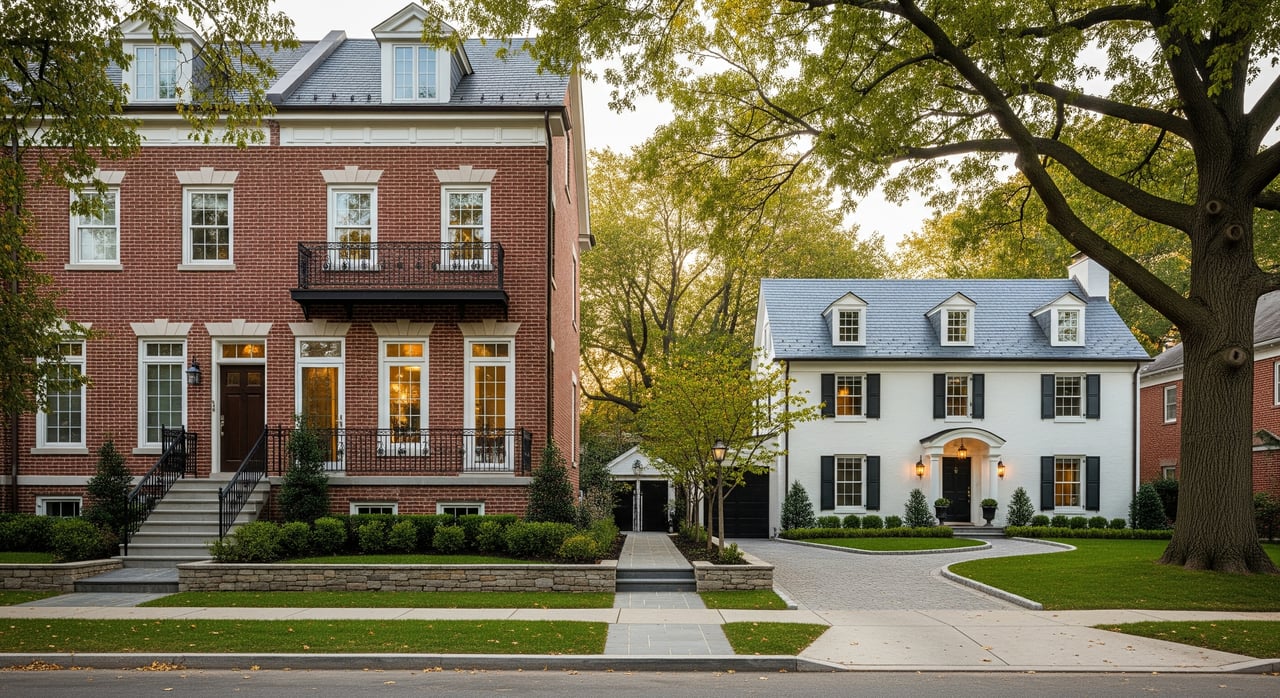
Trying to choose between a townhome and a single-family home near Wiltondale? You are not alone. Both can fit your lifestyle, but the “cheaper” option on paper often shifts once you add taxes, utilities, HOA fees, maintenance, and long-term repairs. This guide breaks down the true cost of ownership for each type, shows you how to gather real local numbers, and gives you a simple way to compare. Let’s dive in.
What the true cost includes
When you compare a townhome with a single-family home, look beyond the list price. Your monthly and long-term costs fall into a few buckets:
- Mortgage and financing: Principal, interest, and potential PMI if you put less than 20% down.
- Property taxes: Based on assessed value and county rates; these vary by address.
- Insurance: HO-3 policies typically cover single-family structures, while many townhome owners carry HO-6 policies for interiors when the HOA covers the exterior. The details matter for premiums and deductibles. The Insurance Information Institute explains these policy types.
- HOA/condo fees and reserves: Townhomes often have monthly fees for exterior maintenance, master insurance, trash, snow, and amenities. Ask about reserves and special assessments. The Community Associations Institute outlines best practices for budgets and reserve studies.
- Utilities: Electric, gas, water/sewer, trash, and internet. Attached homes often use less energy due to shared walls, but size and systems matter. The U.S. Energy Information Administration and Department of Energy explain how building design affects energy use.
- Routine maintenance: A common rule of thumb is to budget about 1% of a home’s value per year for a single-family home, with lower percentages for townhomes where an HOA covers exterior items. Sources like Angi publish ranges and guidance.
- Capital repairs (capex): Roofs, major HVAC, siding, sewer laterals, and big trees. In townhomes, some items are covered by the HOA. If reserves are low, owners may face special assessments.
- Landscaping and snow: Often a direct cost for single-family homes and included for many townhomes.
- Parking and convenience: Driveway/garage versus assigned or street parking.
- Time costs: Townhomes can save time on yard care and snow. Single-family homes offer more control and outdoor space but often take more upkeep.
Local factors in Wiltondale and Towson
Local inputs in Baltimore County can change your numbers. Here is where to find the facts.
Property taxes and assessments
Baltimore County sets rates and handles assessments. Two similar homes can have different tax bills based on assessed value. For a real estimate, look up the parcel’s assessed value and recent bills through the Baltimore County government. This is the most reliable way to estimate your annual taxes for a specific address.
Utilities and seasonal bills
BGE serves most of the area, and heating season can bump winter costs. Ask sellers for 12 months of utility bills to see real usage. You can also review rates and conservation programs at BGE. For water and sewer policies, check the Baltimore County government as well. Townhomes usually have lower heating and cooling loads due to shared walls, but actual savings depend on insulation, HVAC efficiency, and square footage. The Department of Energy and EIA explain these drivers.
HOA services and reserves
Townhome communities around Wiltondale and Towson vary widely. Some cover full exterior maintenance and insurance. Others handle only landscaping and snow. Always ask for the HOA’s budget, reserve study, insurance certificate, and recent meeting minutes. The Community Associations Institute provides guidance on healthy reserves and governance.
Insurance and risk checks
Policy costs differ based on coverage, deductibles, and local risk. Confirm flood zone status through the FEMA Flood Map Service, which may affect both insurance and maintenance priorities. Then compare an HO-3 quote for a single-family home to an HO-6 quote for a townhome. The Insurance Information Institute has helpful coverage overviews.
Contractor pricing and exterior care
Labor and material costs in Baltimore County can differ from national averages. If you are budgeting for lawn care, HVAC tune-ups, or roof work, get three local quotes. Sources like Angi can help you gauge ballpark ranges before you call local providers.
How to calculate your monthly TCO
Use this simple formula to compare any two homes side-by-side:
Monthly TCO = Mortgage principal and interest + (Annual property tax / 12) + (Homeowner insurance / 12) + HOA fee (if any) + Average monthly utilities + (Routine maintenance / 12) + (Landscaping/snow / 12) + (Reserve for capital repairs / 12) + Parking (if any)
Numbers to collect before you decide
- Purchase price and your down payment.
- Last property tax bill and the current assessed value from Baltimore County.
- Seller’s 12 months of utility bills for electric, gas, and water/sewer; clarify what the HOA covers.
- HOA packet: budget, last 2–3 years of financials, reserve study, insurance certificate, meeting minutes, any planned projects, resale certificate fees, and current dues.
- Insurance quotes: HO-3 for single-family; HO-6 for townhome plus details of the HOA’s master policy and any required deductibles.
- Recent big-ticket repairs and dates: roof, HVAC, siding, windows, and any sewer or drainage work.
- Home facts: square footage, number of attached walls, lot size, parking, and garage details.
A hypothetical example (illustrative only)
These figures are examples to show how costs can shift. Replace them with real numbers from a specific property.
Assumptions (illustrative):
- Single-family price: $600,000
- Townhome price: $470,000
- Down payment: 20% at the same rate and term
- Annual property tax: 1.0% of price for illustration only
- Insurance: single-family HO-3 at $1,800/yr; townhome owner HO-6 at $800/yr (HOA master policy handled by association)
- HOA fee (townhome): $350/month covering exterior, lawn/snow, and reserves
- Utilities: single-family $300/month; townhome $220/month
- Routine maintenance: single-family ~1%/yr ($6,000/yr); townhome ~0.6%/yr ($2,820/yr)
- Capex reserve: single-family $100/month; townhome’s reserve included in HOA, but verify adequacy
Illustrative monthly totals, excluding mortgage principal and interest:
- Single-family: Taxes $500 + Insurance $150 + Utilities $300 + Maintenance $500 + Capex reserve $100 = $1,550/month (plus mortgage)
- Townhome: Taxes $392 + Insurance $66 + HOA $350 + Utilities $220 + Maintenance $235 = $1,263/month (plus mortgage)
What it shows: In this scenario, the townhome’s non-mortgage carrying costs are lower because exterior items and some insurance are built into the HOA fee, and utilities are lower. Your result can differ if the HOA fee is higher, reserves are weak, or the townhome has larger interior systems. Always validate with the real HOA budget, reserve study, seller utility bills, and the county tax bill.
Decision guide: match cost to lifestyle
Use these simple profiles to focus your search.
- Prioritize low time commitment: You want predictable monthly costs and minimal yard work. Townhomes often fit, especially when HOA fees cover exterior care. Review reserve health and assessment history to avoid surprises.
- Prioritize space and flexibility: You want more privacy, a yard, or workshop space. A single-family home may fit better, with the tradeoff of higher and less predictable maintenance and capex.
- Budget-focused monthly payment: You want the lowest all-in monthly outlay. Compare total TCO, not just the mortgage. A lower purchase price and shared-wall efficiency can make a townhome more affordable. Balance that with HOA rules.
- Rental or investment intent: Check HOA rental policies and any caps before you buy a townhome. Single-family homes may offer fewer restrictions but can require more maintenance and management. Review local rental comps on platforms supported by market data sources such as Bright MLS or insights from NAR.
Buyer checklist for Towson and Wiltondale
Before you write an offer, confirm these items:
- Property taxes: Pull the last tax bill and assessed value from the Baltimore County government. Ask about any outstanding tax liens.
- Utilities: Request the seller’s last 12 months of electric, gas, and water/sewer bills. Clarify what the HOA covers.
- HOA health: Obtain the budget, reserve study, meeting minutes, insurance certificate, and management contract. Ask about pending special assessments, planned capital projects, resale certificate fees, pet rules, rental caps, parking rules, and litigation.
- Insurance: Get quotes for HO-3 (single-family) or HO-6 (townhome), and review the HOA master policy. The Insurance Information Institute provides helpful context.
- Risk and site checks: Confirm flood zone status with FEMA. Ask about drainage, any past water intrusion, and large trees near the home.
- Recent repairs: Verify ages of roof, HVAC, windows, and any foundation or masonry work. Keep receipts or warranties.
- Service costs: If you plan to outsource mowing, snow removal, or HVAC maintenance, get three local quotes. Resources like Angi can help you estimate ranges.
How we can help with a local TCO
You deserve a clear, local comparison before you commit. Our team can gather real inputs for the homes you are considering near Wiltondale, including county tax records, HOA budgets and reserve studies, and seller utility histories. We will build a side-by-side worksheet so you can see the true monthly and long-term costs for each option.
If you are downsizing or planning a late-life move, we can also help you weigh the time and maintenance savings of a townhome against the space and flexibility of a single-family home. Our approach pairs neighborhood knowledge with calm, detailed project management so you can move forward with confidence.
Ready to compare your top properties with real numbers? Reach out to The Hofmann Home Group to get a property-specific TCO worksheet and start your Towson search with confidence.
FAQs
What is included in a Wiltondale TCO comparison?
- Include mortgage principal and interest, annual property taxes, homeowner insurance, HOA dues if applicable, utilities, routine maintenance, landscaping/snow, capital repair reserves, and any parking costs.
How do HOA fees impact townhome affordability near Towson?
- HOA fees can replace many variable exterior costs with a fixed monthly expense. Review the HOA budget and reserves to ensure fees match services and that special assessments are unlikely.
Will a townhome save me on utilities in Maryland winters?
- Often yes, because shared walls reduce heat loss, but savings depend on the unit’s size, insulation, and HVAC efficiency. Confirm by reviewing 12 months of seller utility bills.
Do townhomes require less insurance than single-family homes?
- Typically, yes for the owner’s portion, because the HOA’s master policy may cover the exterior. Compare an HO-6 quote to an HO-3 quote and review master policy deductibles and coverage.
How should I budget for major repairs on a single-family home?
- A common rule of thumb is about 1% of the home’s value per year for maintenance, with additional savings for big-ticket items like a roof or HVAC. Adjust for age, condition, and local contractor pricing.